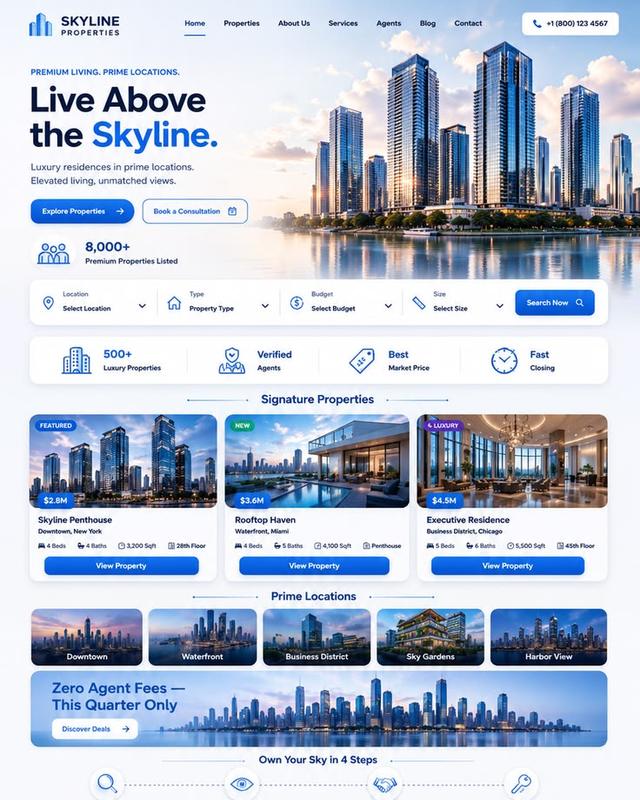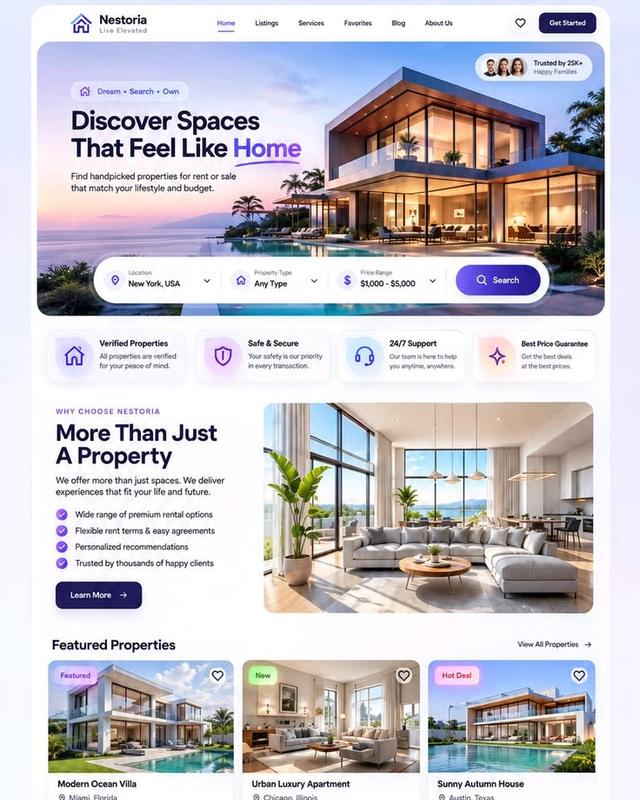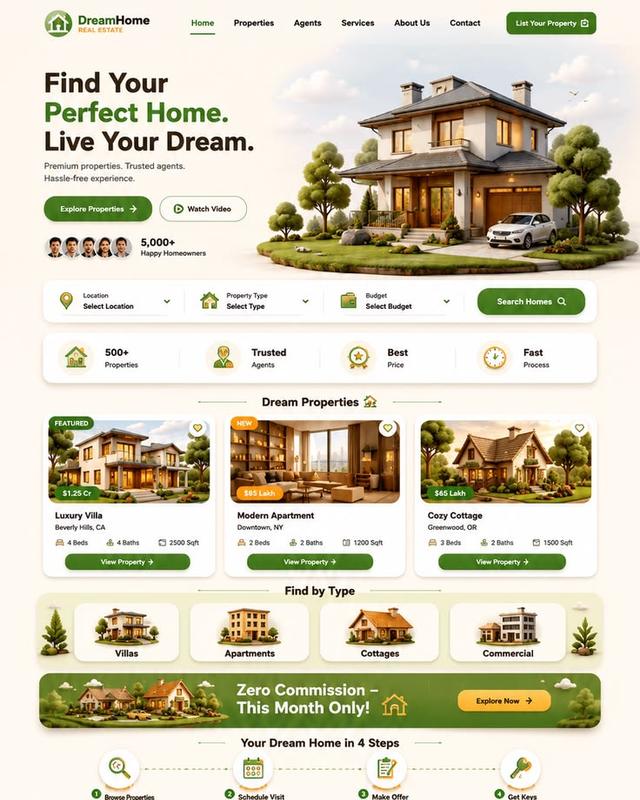


Real estate app development has stopped being a "nice to have" for brokerages and property companies in the United States. It's now the primary channel buyers, renters, and investors use to find, evaluate, and act on a property — and agencies that treat their app as an afterthought are losing leads to the ones that don't.
Internet-based search is now essentially universal among homebuyers, and the majority of that search activity starts on a phone, not a desktop. If your brokerage, PropTech startup, or property management company doesn't have a fast, well-built mobile app in 2026, you're not just missing a convenience feature — you're invisible at the exact moment a buyer or renter is making a decision.
This guide covers what actually matters if you're planning real estate mobile app development this year: the features that convert, the technology driving the next wave of PropTech, what it realistically costs, and how to pick the right real estate app development company for a US market that's moving fast.
Why 2026 is the tipping point for real estate apps
A few forces are converging at once, and together they explain why real estate mobile app development is accelerating faster than almost any other vertical in software right now:
- Mobile-first search is the default, not the exception. The overwhelming majority of home searches now start on a mobile device. An agency whose "mobile experience" is just a shrunk-down website is losing buyers before a human agent ever gets involved.
- AI adoption among agents has more than tripled in two years. Roughly a third of agents now use AI tools daily, up from about one in ten just a couple of years ago — and brokerages are increasing their technology budgets specifically to keep pace, with AI-powered tools the single biggest category of new spend.
- PropTech investment keeps compounding. Analyst estimates put the global PropTech market growing at a low-to-mid teens compound annual rate through the early 2030s, more than doubling from where it stands today. Capital is flowing into exactly the kind of AI-driven, mobile-native platforms this guide covers.
None of this means every agency needs to build a unicorn-scale PropTech platform. It means the baseline expectation for "a good real estate app" has moved — and the agencies investing now are the ones that will own the search results, the App Store rankings, and the buyer relationships in 2027 and beyond.
Must-have features for a real estate app in 2026
We scope every real estate app development project around a core set of features that consistently drive engagement and lead conversion for US brokerages, property managers, and PropTech platforms:
- AI-powered property recommendations. Matching listings to a buyer's behavior and stated preferences — not just their saved filters — keeps users opening the app instead of drifting back to Zillow or Realtor.com.
- AI chatbots and virtual assistants. A well-scoped in-app assistant qualifies leads, answers listing questions at 11pm on a Sunday, and routes anything complex straight to a human agent.
- Immersive virtual and 3D property tours. Buyers increasingly expect to walk a property from their phone before ever scheduling an in-person showing, especially for out-of-state or investment purchases.
- Mortgage and affordability calculators. Built-in financial tools keep the decision-making inside your app instead of sending users to a third-party site to run the numbers.
- CRM and lead-routing integration. Every inquiry, saved search, and scheduled showing should flow straight into your agents' existing CRM — no manual re-entry, no dropped leads.
- Push notifications for new and price-changed listings. This is one of the highest-ROI features in the entire category: it's the single biggest reason users re-open a real estate app instead of only checking email.
- Map-based search with neighborhood and school data. Location context is often the deciding factor for a family buyer, and it needs to live inside the map, not a separate tab.
- In-app messaging and video calls with agents. Keeping the conversation inside your platform — rather than handing it off to a phone call or a third-party messaging app — keeps you in control of the relationship and the data.
- Secure document storage and e-signing. Offer letters, disclosures, and lease agreements handled in-app remove one of the biggest friction points in closing a deal on mobile.
- Predictive analytics for pricing and market trends. Increasingly expected by investor and multi-property users who want to see where a market is heading, not just where it's been.
What does it cost to build a real estate app in 2026?
This is the question every prospective client asks first, and the honest answer is: it depends heavily on scope, not on the year. A tightly scoped MVP — property search, listings, basic filters, and lead capture — typically runs in the lower tens of thousands of dollars and can ship in a matter of weeks. A fuller platform with AI-powered recommendations, in-app messaging, CRM integration, and virtual tours moves into the mid-to-high tens of thousands, with a build timeline usually measured in a few months. A full PropTech platform — multi-sided marketplace, investor tools, predictive analytics, native iOS and Android apps built from one codebase — is a six-figure investment and a longer engagement.
The single biggest cost driver isn't the feature list on paper, it's how many of those features need custom AI logic versus off-the-shelf integration. That's exactly why we scope every project against the actual feature list a client needs, rather than quoting a flat package price that either overcharges for a simple MVP or undersells a complex platform.
Frequently asked questions
How long does it take to build a real estate app?
A focused MVP typically ships in 6–10 weeks. A full-featured platform with AI matching, CRM integration, and virtual tours usually takes 3–6 months, depending on how much of it is custom-built versus integrated from existing services.
Is a custom real estate app worth the investment compared to a template?
For most brokerages and property companies, yes — a template can get a basic listing app live quickly, but it can't match your CRM, your lead workflow, or your brand, and it caps how much AI personalization you can ever add later. The break-even point is usually reached the moment your app generates a handful of qualified leads a month that would otherwise have gone to a competitor's app or a third-party portal.
Do I need native iOS and Android apps, or is cross-platform enough?
For the vast majority of real estate apps — which are UI, data, and workflow-driven rather than dependent on deep native device APIs — a single cross-platform codebase delivers both iOS and Android from one engineering team, at a fraction of the cost and timeline of building two native apps separately.
Choosing a real estate app development company in the US
Look for a partner that treats your app as a lead-generation and retention engine, not just a listings viewer. That means a team that can talk fluently about AI-driven personalization, CRM integration, and mobile SEO in the same conversation as UI design — and one that scopes a project around your actual feature list and growth plan, not a generic package.
We've built exactly this kind of platform before: CrewIQ, our AI-powered workforce app, and Unbroken Investing, our AI-matched real estate investment platform, both started from the same question every real estate client asks us — how do we turn a mobile app into a genuine growth channel, not just a digital brochure.